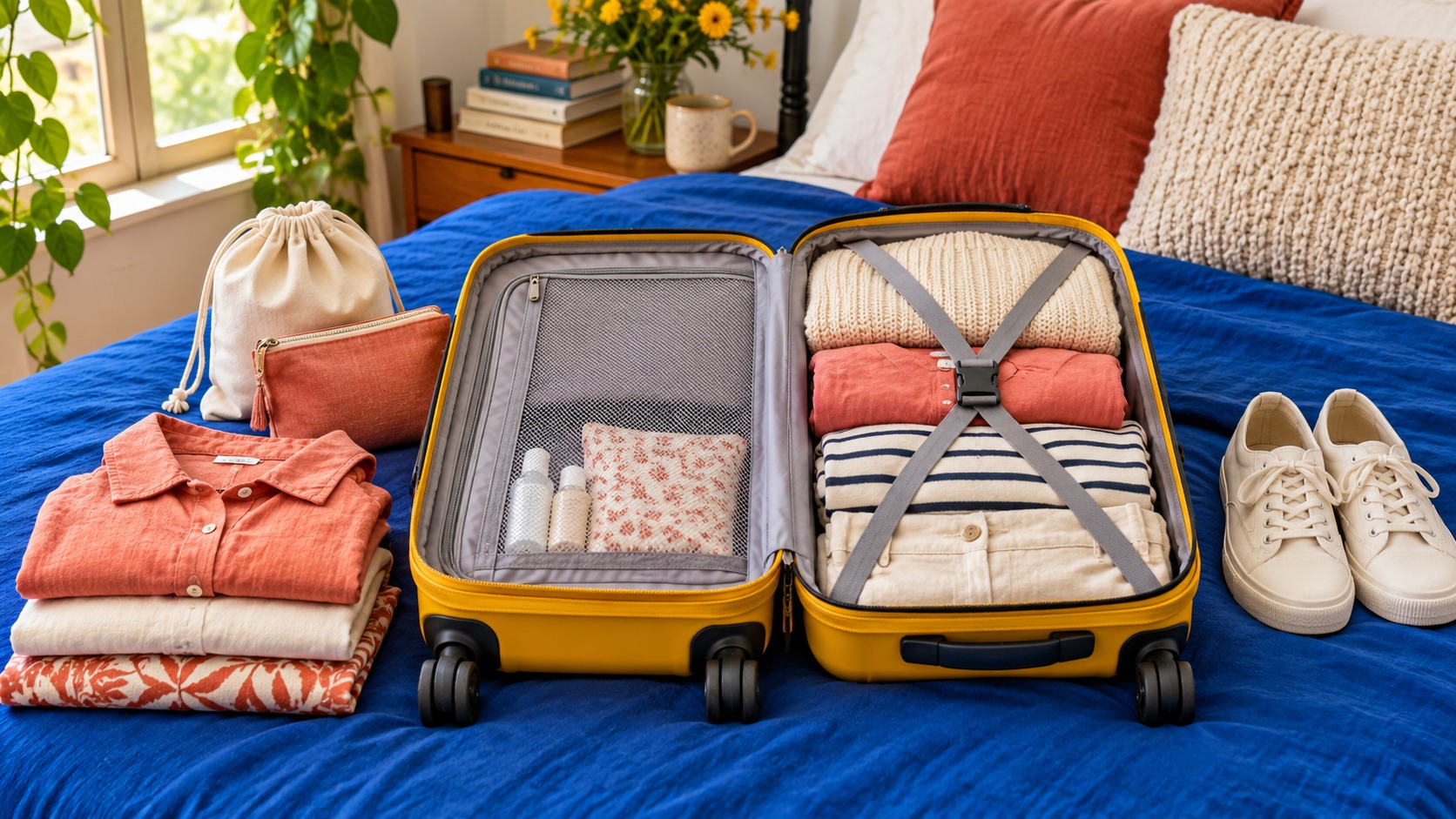
The suitcase is open, the trip is approaching, and suddenly every packing accessory seems essential. Before adding organizers to your order, try packing the actual bag with the clothes and small pouches you already own. The space problem may be a quantity problem, a layout problem or simply a pair of shoes you do not need.
This carry-on packing plan starts with the trip rather than a shopping list. It helps you decide what belongs in the bag and identify any specific missing item. It does not assume that a particular suitcase size is accepted by every airline. Check the current allowance for your airline, fare and itinerary before choosing the bag.
Give the bag a real test
Start with your existing luggage. Check the wheels, handle, closures and lining. Measure its exterior as the airline directs, including protruding parts where required, and compare its weight with any applicable limit. A bag described by a retailer as “carry-on” still needs to fit your trip’s rules.
Make a short list of what the trip involves. A weekend visiting family needs a different mix from a work event with formal clothing. Note the activities, likely weather and whether laundry will actually be available. Packing for every imaginable version of the trip is how an overnight bag becomes a moving project.
Lay out complete outfits
Place your clothes on the bed and group them into outfits you would genuinely wear. Choose combinations that share useful pieces. A second top that works with the same trousers may earn its space more easily than an item that needs a different jacket and shoes.
Our guide to making outfits work with clothes you own can help you find those combinations before shopping. If an existing garment needs attention, deal with it before packing rather than expecting a last minute order to arrive in time.
Keep enough clothing for the actual itinerary and your personal needs. Do not build the plan around washing things in a sink unless you intend to do that and will have suitable drying time. A theoretical laundry routine takes up very little room on paper.
Use ordinary containers for small items
A fabric pouch, an existing toiletry bag or a clean reusable bag can group small items without a matching organizer set. Give each container a purpose. One might hold charging cables, another personal care items, and another clean socks. The container should make something easier to find, rather than become a project of its own.
Do not transfer products into unsuitable containers. Check both the product’s storage directions and the current transport rules that apply to your route. Leave room for any required screening steps. This guide does not replace airline, airport or destination requirements for liquids, batteries or restricted items.
Keep essentials you may need during the journey accessible. If a larger bag has to be checked at the gate, you should be able to separate the small items you need to retain without unpacking everything in a queue.
Pack once, then edit
Place heavier, sturdier items where they make sense for your bag’s shape and handling. Fold or roll clothes according to what fits and how you want to wear them. Neither method creates extra baggage allowance, so judge the result in the actual suitcase rather than by an attractive packing video.
Close the bag without forcing it. Lift it, roll it and check that you can manage it comfortably. If it is too full, remove one category at a time: extra shoes, duplicate toiletries, just in case outfits or bulky items you planned to wear during travel.
Compression organizers can change how clothing occupies space, but they do not reduce the weight of the items inside. If weight is the limiting factor, the useful change is usually in the packing list. Avoid buying a product to solve a different problem from the one you actually have.
Price one missing item instead of a whole system
After the test, write down the exact gap. Perhaps you need one suitable small bottle, a replacement cable or a pouch that fits a particular pocket. Include its required dimensions or compatibility so that shopping stays focused.
Compare a small purchase with the cost of any larger set you are considering. In a hypothetical example, replacing one damaged pouch for $8 costs less than buying a $28 organizer set when the remaining pieces duplicate bags you own. The set becomes useful only if its other parts earn their place.
If travel clothing is the missing item, check its measurements before ordering. Our online clothing measurement guide helps you compare it with a garment that already fits. Allow time for delivery and possible returns rather than treating the departure date as a guaranteed shipping promise.
Leave a little room for the journey home
Pack a simple bag for laundry and decide how you will carry anything acquired during the trip. If you intend to buy gifts, include their space and cost in the plan before leaving. You can use the same idea when organizing a pet sitter supply kit: a short, specific list is easier to use than a collection of extras.
Your finished bag should support the trip you planned. Keep the packing list after you return and note what went unused or what you wished you had brought. That record is a more personal guide for next time than another basket of travel accessories.