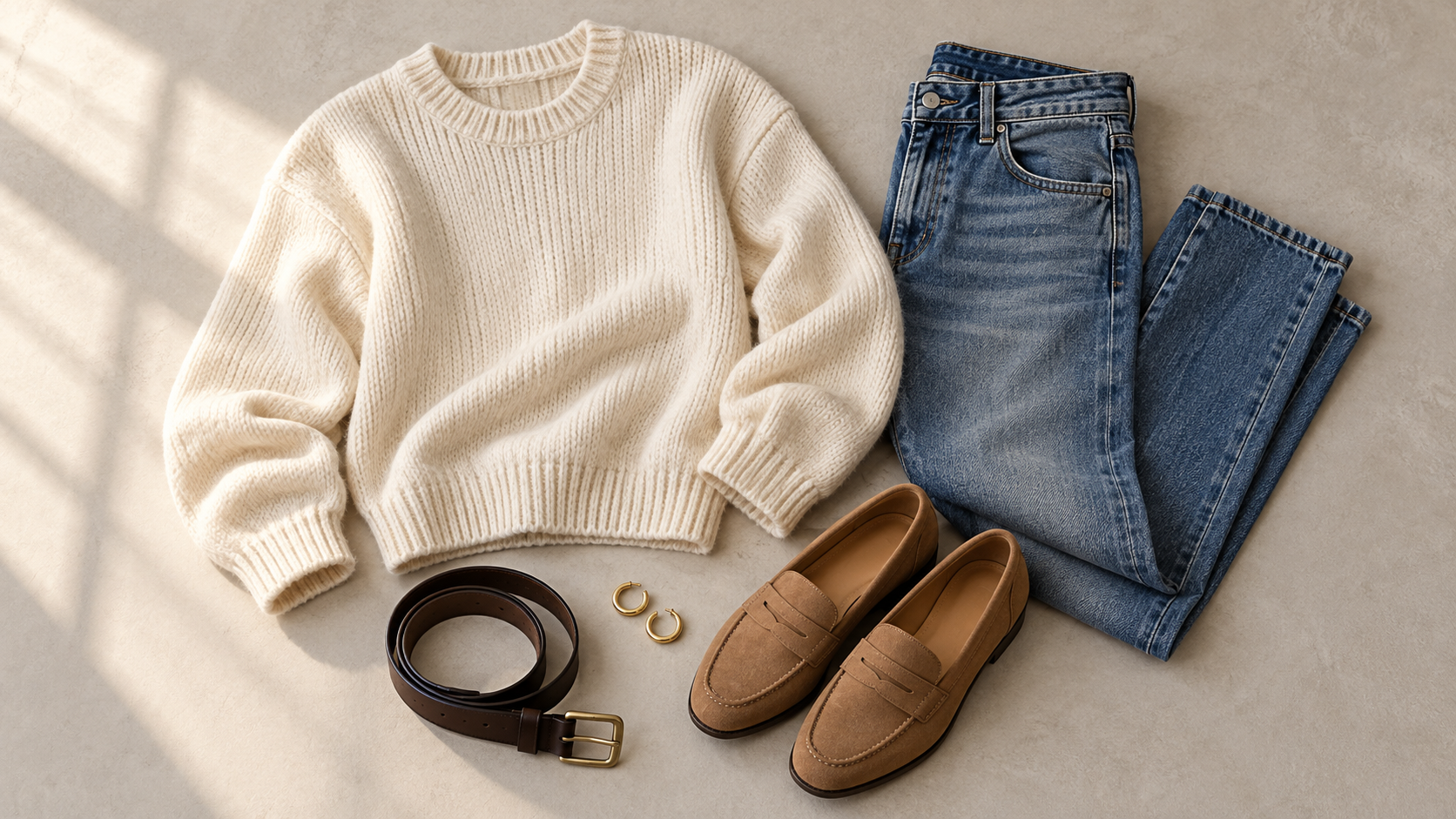
If your wardrobe is full but getting dressed still feels strangely difficult, another shopping order may not be the missing piece. Sometimes the useful clothes are already there. They just have not been introduced properly.
Before buying an entire new outfit, spend a little time styling what you own. This is a practical exercise, not a challenge to become a completely different person by Monday. The goal is a few combinations that feel good and work for your actual week.
Choose one real-life situation
Start with something specific: a normal workday, a casual dinner, or a weekend of errands. “Look more put together” is a vague assignment. “Have an easy outfit for Saturday lunch” gives you something you can finish.
Pick one item you already like wearing. Build around it with clothes that fit your current body, weather, and plans. Leave the aspirational pieces for another day. Today’s outfit needs to survive today’s schedule.
Change one proportion before changing everything
Try a tucked or half-tucked top with a looser bottom, or a shorter outer layer over a longer shirt. If everything feels bulky, swap one roomy piece for something closer fitting. If an outfit feels too formal, change the shoes before rejecting it completely.
These are experiments rather than universal rules. Look in a full-length mirror, sit down, and walk around. A combination that needs constant adjusting has already told you something useful.
Pick a simple color thread
Choose two or three colors from the items you have pulled out. Repeat one in a shoe, belt, bag, or outer layer if you already own a suitable option. The pieces do not need to match perfectly. A little repetition can make separate items feel intentional.
For example, blue jeans, a cream top, and brown shoes already form a workable starting point. Test a navy jacket or a brown bag from your closet. You are checking combinations, not creating a shopping list for every example.
Fix the small distractions
Lint, a loose thread, a missing button, and a folded-under collar can make an otherwise good outfit feel unfinished. Set aside a few minutes to check them. Use care methods suitable for the garment and follow its label before washing, ironing, steaming, or removing pills.
Put anything that needs a repair into one small basket. Then make an actual decision: repair it yourself, get a quote, or stop counting it as available clothing. A pile of imaginary future outfits is not helping you get dressed.
Photograph three outfits you would repeat
Take a quick mirror photo of each combination. Save the pictures in a phone album labeled by the situation: work, weekend, or dinner. Include the shoes and outer layer so you do not have to solve the last part again next time.
Keep the test realistic. If you would never wear that belt for more than ten minutes, it does not belong in the winning photo just because it looks good standing still.
Let the missing item prove itself
Only after trying several outfits should you note a possible gap. Be specific: “a plain top that works under both jackets” is more useful than “new tops.” Write down the color, fit, and items it needs to work with.
If the same gap keeps appearing, you have a reason to shop. Our fall clothing shopping guide can help you plan the purchase. If a secondhand option could work, use our secondhand clothing checklist before paying.
Finish with three saved outfits and one short repair or shopping list. That is a useful wardrobe refresh, even if the total spent is zero.