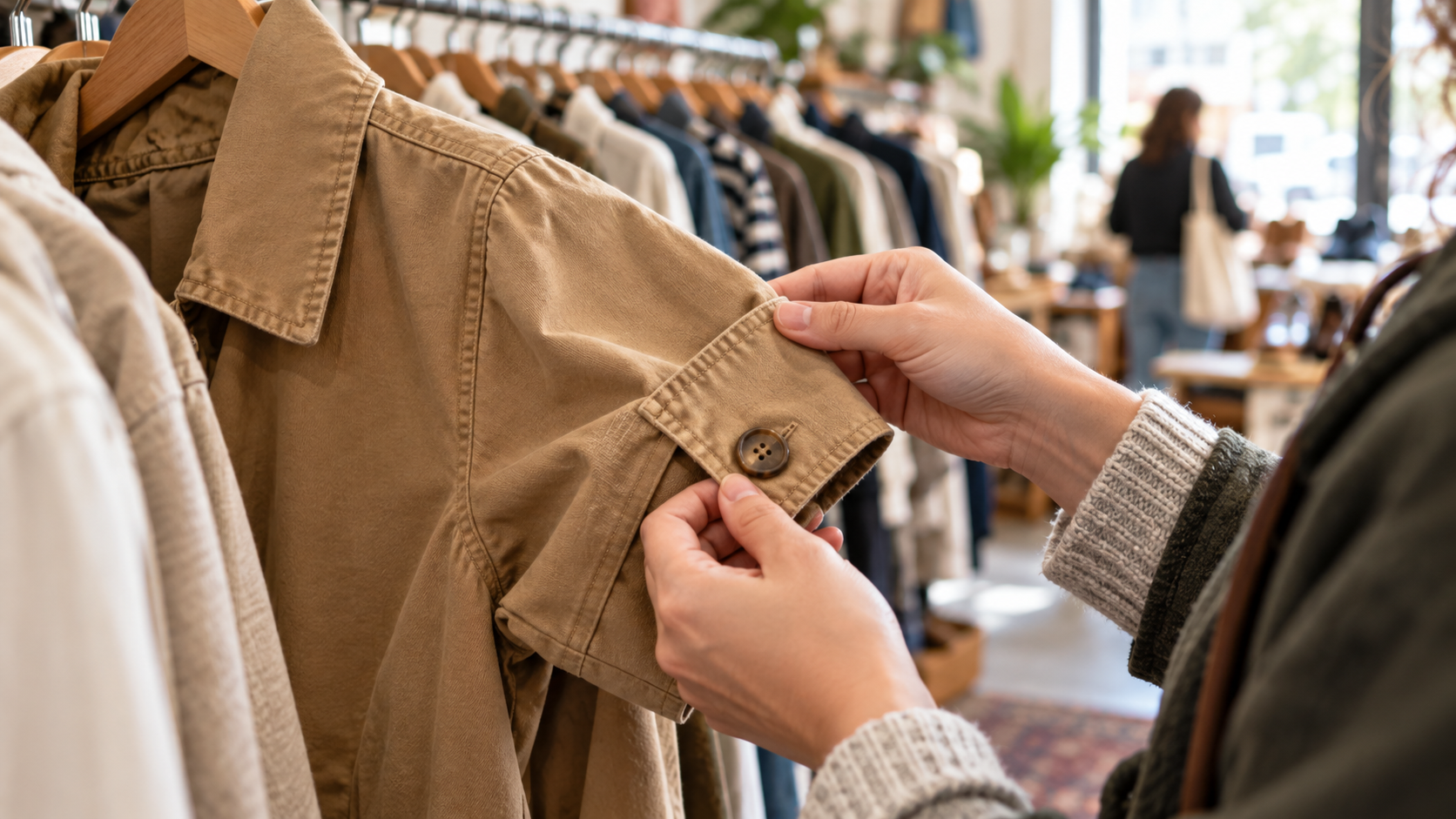
Finding a great secondhand jacket is satisfying. Discovering the broken zipper after you get home is considerably less charming. The price tag may be small, but a quick inspection still deserves a place in the shopping routine.
Use this checklist for clothing you can examine in person, with a few adjustments for online listings. It will not reveal every possible problem. It can help you spot the obvious ones before a bargain becomes a repair project you did not want.
Read the label before falling in love
Check the size, fabric, and care instructions where the labels are present. The printed size is a starting point, not a fit guarantee. Brands, cuts, and previous alterations can make similar labels fit very differently.
Notice the care requirements too. If a garment needs a cleaning method you would rather not pay for or manage, include that in the decision. “I will figure it out later” has financed many neglected clothes.
Inspect the places that do the work
Look closely at underarms, cuffs, collars, elbows, seat seams, and inner thighs as appropriate for the garment. Check for stains, thinning fabric, holes, stretched areas, or repairs. Turn the piece inside out when allowed, and examine the lining and seams.
Use decent light. A dark corner can hide a mark that looks very obvious at home. If the condition is uncertain, ask the seller rather than treating a flattering mirror as an inspection tool.
Try every fastening
Gently zip the zipper, fasten the buttons, and check snaps or hooks. Count the buttons and inspect the fabric around them. Look at belt loops, pockets, and hems as well.
A missing standard button may be a repair you are happy to make. A damaged specialty zipper could be a different commitment. The important question is whether you understand the repair before buying, not whether any flaw automatically makes the item unsuitable.
Test the fit while moving
If trying on is permitted, sit, bend, raise your arms, and fasten the garment as you would normally wear it. Check whether the shoulders sit comfortably and whether the length works with the shoes or layers you expect to use.
When you cannot try something on, use measurements from a comparable garment you already own. For online shopping, request relevant measurements and clear close-up photos. A listing that only shows the front may leave important condition questions unanswered.
Add the after-purchase costs
Consider cleaning, alterations, repair materials, delivery, and any fees before deciding that the price works. For illustration, a $15 garment with a $20 alteration becomes a $35 purchase before cleaning or shipping.
That could still be worthwhile if it meets a specific need. Compare the total with other suitable options, rather than with a dramatic original retail price. If a repair needs a professional, get a realistic estimate instead of guessing.
Check the seller’s return terms
Read the actual terms for the store, marketplace, or individual listing. Do not assume every secondhand purchase has the same return options. For an online order, keep the description and condition photos in case you need to refer to them.
Finally, picture the item in your real wardrobe. Name two outfits it can join now. Our guide to making outfits from clothes you own is a useful way to test that before shopping.
A good secondhand find is something you can use, care for, and afford at its full expected cost. If the inspection raises more questions than the seller can answer, leaving it behind is a perfectly successful shopping decision.