Before you buy clothing online, a few measurements can make the product page easier to judge. A size label is a starting point, but it does not show how a particular cut will sit on your shoulders, where a hem will fall or whether a jacket will fit over a sweater.
To check clothing measurements online, begin with something you already wear comfortably. Use it as a reference, read the retailer’s measuring instructions and keep the return conditions in view while comparing options.
Find out what the size chart measures
Some charts list body measurements; others list the finished garment. Those are different comparisons. A garment may include room for movement, layering or a loose silhouette, so its dimensions will not necessarily match your body measurements.
Read the chart headings and measuring diagram before using a number. Check whether the units are inches or centimeters. If a chart is unclear, look for product-specific guidance or ask the store rather than assuming that a general brand chart describes every style.
Choose a similar garment you already like
Compare a shirt with a shirt, a jacket with a jacket and trousers with trousers. A fitted tee is not a useful reference for a roomy winter coat. Choose an item that gives you the kind of fit you want from the new purchase.
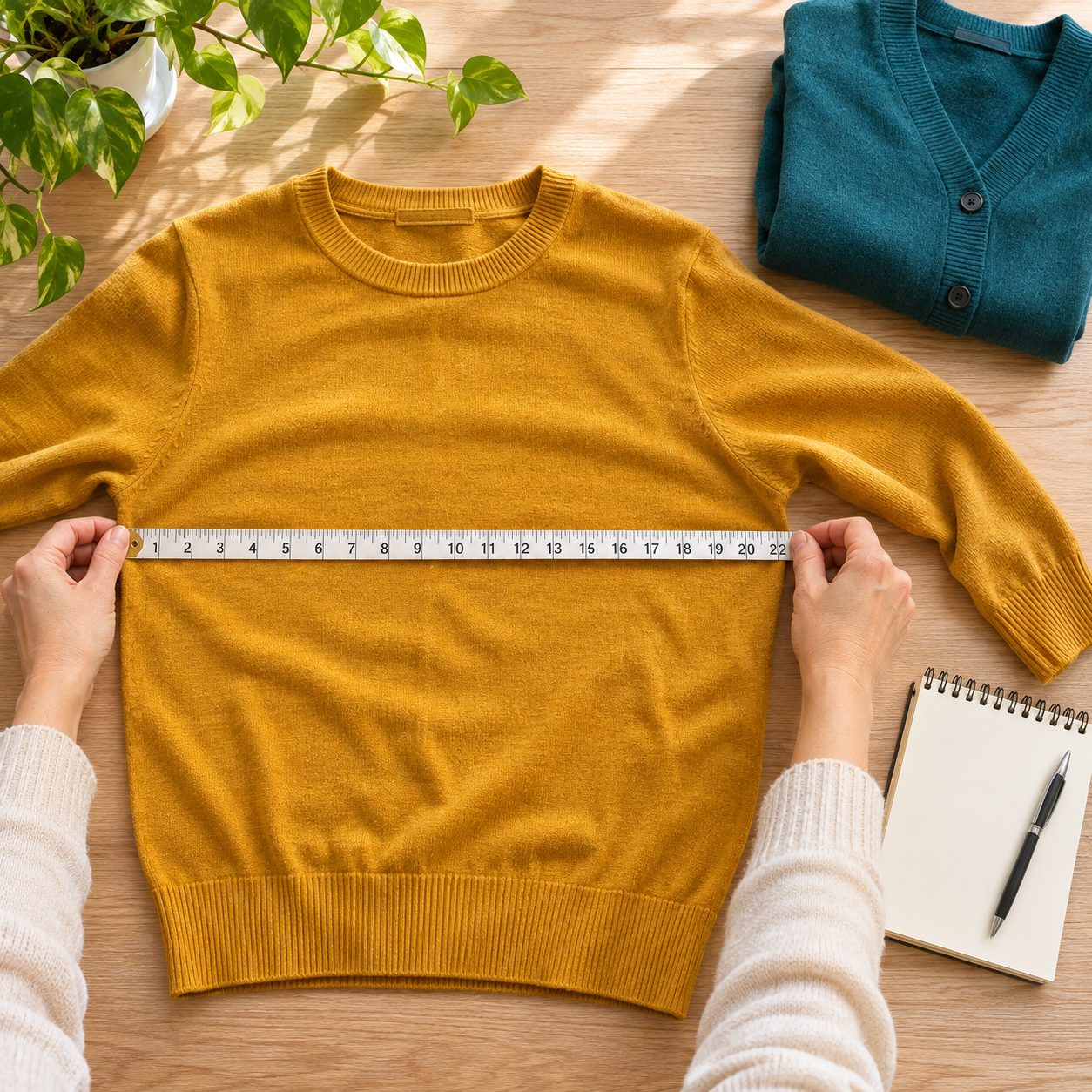
Lay it flat on a clear surface without stretching it. Smooth folds gently, fasten it as you normally would and follow the same measuring points shown by the retailer. Take a quick photo of your tape placement so you can repeat the comparison later.
Record a few useful measurements
You do not need a complete tailoring worksheet to spot an obvious mismatch. Start with the dimensions most relevant to the item and the areas where you commonly have fit problems.
- For tops, check chest width and body length using the retailer’s stated measuring points.
- For jackets, consider shoulder and sleeve measurements as well as room for layers.
- For trousers, check the waist guidance, rise and inseam where those measurements are provided.
- For any garment, note whether the fabric stretches and whether the cut is described as fitted, regular or relaxed.
Keep flat width separate from circumference. For example, a top measuring 20 inches across when laid flat has an approximate 40-inch chest circumference at that point. That conversion does not tell you the intended body size or guarantee how the garment will fit.
Compare length as carefully as width
A piece can fit around the body and still feel wrong because of its length. Check where your reference garment ends and whether that is the result you want. For trousers, confirm the inseam measurement method instead of treating an outside leg measurement as interchangeable.
For sleeves, use the diagram supplied for that product. Some stores measure from the shoulder seam and others use a different starting point. Comparing two numbers taken from different places can create a misleading match.
Make a short comparison note rather than relying on memory. Record the garment, size, measuring method and the fit you like about it. You can reuse that reference when browsing another store, while still checking whether its chart uses the same method.
If you are between sizes, do not choose solely from the number on the label. Read the product’s fit guidance and consider which dimension is most important for comfortable movement. A roomier chest does not automatically solve a short sleeve or a different shoulder shape, so look at the measurements together before ordering.
Allow for how you will wear it
Think through the complete outfit. A jacket for wearing over a thin shirt has a different job from one worn over an insulating layer. If possible, try your reference piece with the clothes you expect to wear underneath.
Our guide to hunting clothing deals also considers intended use when evaluating a purchase. The same approach applies to everyday clothing: movement, layering and practical use matter alongside the advertised discount.
Read the purchase conditions before choosing a size
Check whether the selected size or color is final sale, whether returns are accepted and who pays return shipping. Review any stated return window before placing the order. A low price can be less appealing when an uncertain fit leaves you with an item you cannot return.
If you are buying clothing as a gift, keep the receipt and deadline together. Our holiday gift return plan provides a simple way to organize those details. For resale purchases, our secondhand clothing checklist adds condition checks that measurements alone cannot cover.
Frequently asked questions
Can I order my usual size without measuring?
You can, but your usual label may fit differently across brands and styles. Comparing the product’s chart with a suitable reference garment gives you more information before deciding.
Should I double every measurement taken flat?
No. A flat chest or waist width may be doubled to estimate circumference, but lengths such as sleeves or inseams should not be doubled. Follow the retailer’s chart and measurement labels.
What if the measurements are missing?
Look for a product-specific size guide or contact the store. If fit remains uncertain, consider the return conditions and whether another item offers clearer information.