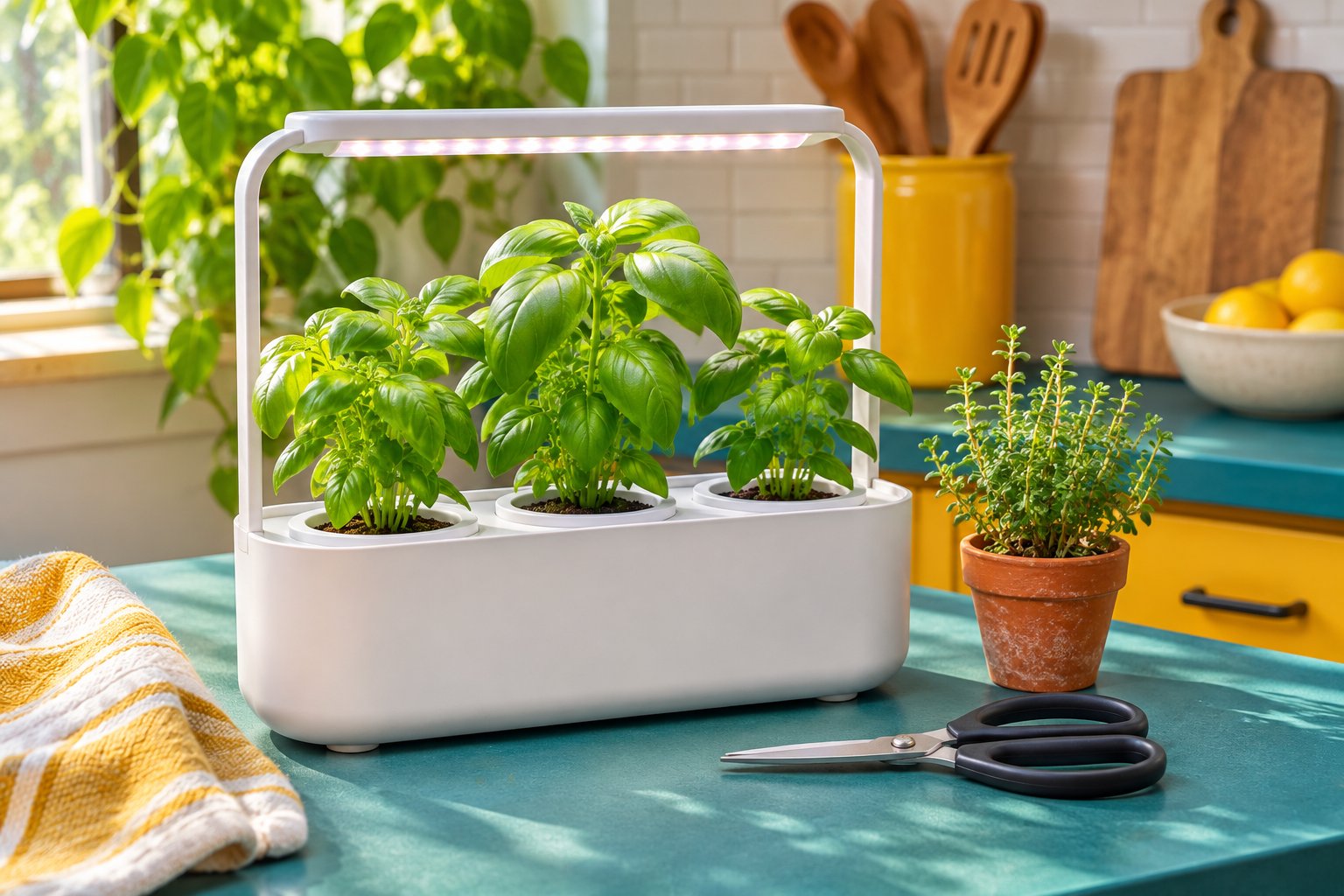
An indoor herb garden looks lovely on a kitchen counter. Whether it earns that space depends on something less photogenic: how often you cook with the herbs, what replacement supplies cost and whether you enjoy caring for plants.
Is an indoor herb garden worth it? It can be a worthwhile hobby and a convenient source of small harvests. Treat grocery savings as a possibility to calculate, rather than a promise that the garden will pay for itself. Here is a practical way to make that decision before a sale catches your eye.
Decide what you want the garden to do
There are three different purchases hiding behind the same product photo. One shopper wants a few basil leaves for dinner. Another wants a gardening activity during colder months. A third hopes to replace regular supermarket herb purchases. All are reasonable goals, but they need different expectations.
Write down the herbs you actually used over the last month. If fresh basil appears in several meals, it deserves consideration. If you normally cook with dried herbs and rarely buy fresh ones, a countertop garden is mostly a hobby purchase. Give that hobby its own spending limit instead of inventing grocery savings to justify it.
Our grocery plan that starts in your kitchen can help you connect a potential harvest with meals you already make. You could also plan one dish for a budget holiday potluck, without assuming the garden will be ready by a particular date.
Compare a smart garden with simpler options
You do not have to jump straight to a powered system. Compare three routes: buying herbs as needed, trying a potted herb in a suitable growing spot, and purchasing a garden with a light and water reservoir. Each has a different mix of cost, space and attention.
A simple pot may be a sensible first experiment if your home offers suitable conditions for the plant. A powered garden may be more appealing when you want an integrated light and a contained setup. Neither option removes the need to choose appropriate plants and follow their care instructions.
For a specific example, Click & Grow lists its Smart Garden 3 as a system for three plant pods, with three basil pods included in the starter kit. That is a small growing area. It should help you picture the scale of the purchase, rather than imagine an unlimited supply of herbs. See the manufacturer’s product specifications for the current kit contents.
Put every recurring cost on the list
Start with the garden’s delivered price, then add the supplies you expect to buy during your first year. Look at replacement pod prices, the number in each pack and whether the varieties match your cooking. A large assorted pack offers little value if you want only one of its herbs.
- Garden and any essential accessories, including delivery.
- Replacement growing supplies for the cycles you actually expect to complete.
- Electricity for a powered model.
- Any optional subscription, listed separately from a single purchase.
Click & Grow lists estimated monthly electricity consumption of 3.8 kWh for the Smart Garden 3. At an illustrative electricity rate of $0.20 per kWh, that would be $0.76 a month, or $9.12 for twelve months. Use your own electricity rate and the specifications for your exact model. That calculation is a planning example, not a quoted household bill.
Also distinguish the refill from the holder. Click & Grow’s cleaning guidance says to retain the reusable plastic cups, lids and domes. Check which parts need replacing before adding accessories to your order.
Try the savings calculation without guessing a harvest
Suppose a garden costs $100 delivered, your planned refills cost $30 and your estimated electricity cost is $10 for the first year. The illustrative first year total is $140. If you normally spend $3 on a packet of herbs, you would need to avoid buying about 47 packets to offset that amount.
That does not mean a small garden will replace 47 packets. It shows what the purchase would need to achieve if saving money were your only goal. Count only herbs you would otherwise buy and actually use. Leaves harvested for a meal you never cook do not reduce a grocery bill.
You can still decide that a hobby is worth $140. Keeping that decision separate from a savings claim makes the purchase easier to judge honestly.
Check the countertop before the checkout
Measure the available width, depth and overhead clearance. Allow for the lamp’s raised position, access to the reservoir and the space needed to lift parts out for cleaning. An attractive photo cannot tell you whether the garden will fit under your cabinets.
Consider where the light will be comfortable in your home and whether the power cable can reach a suitable outlet as the manufacturer directs. If the intended spot does not work, find another before ordering. Moving several everyday items out of the way each time you cook may quickly make the garden less convenient.
Use an offer after the garden makes sense
Once you know the model and the supplies you want, check KouponSnag’s Click & Grow coupons and deals. Review the current eligible items, shipping and final total at the retailer. The store page is a place to check available offers, not a guarantee that a particular promotion will remain active.
Compare the starter kit with a bundle containing extras. If the extras are not on your list, a larger advertised saving may still mean a larger bill. Our Black Friday price check guide explains how to compare the exact item instead of the biggest percentage.
Two questions before you buy
Will a small indoor garden replace supermarket herbs?
It may replace some purchases, but the amount depends on what grows, how much you harvest and what you use. Start with modest expectations and record the purchases you actually avoid.
What if I mostly want it as a gift?
Check the recipient’s available space and interest in caring for plants. Include information about future refill costs. A thoughtful gift should fit the recipient’s routine as well as your budget.
Product specifications checked November 13, 2026. This is a buying guide, not a hands on product test. Prices, kit contents and offers may change. Featured image is an illustrative garden setup.