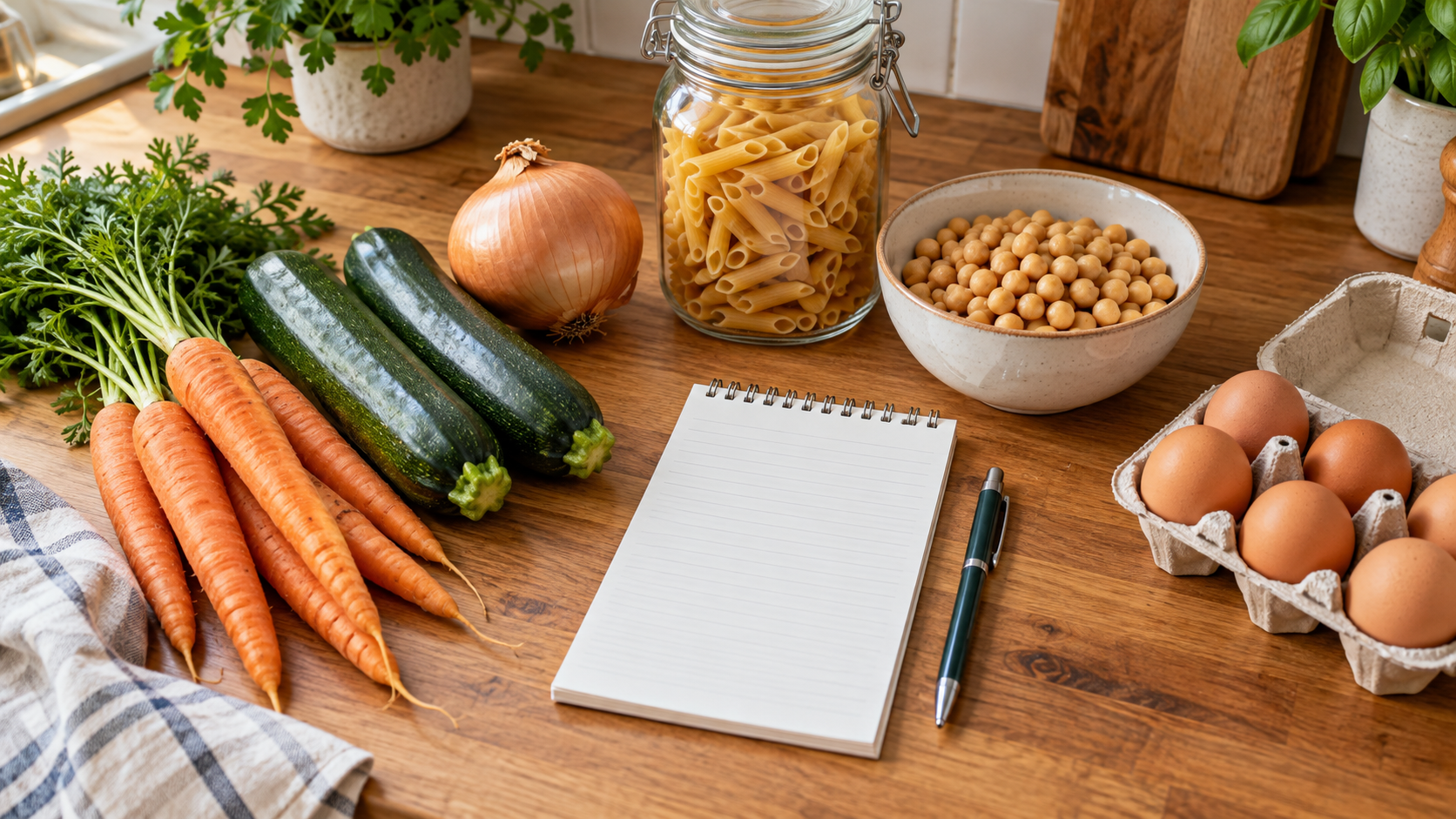
A grocery list is helpful. A grocery list made while standing in front of food you already own is even more helpful. Otherwise, it is surprisingly easy to buy another bag of rice while the first two quietly build a household empire.
This short planning routine starts in your kitchen and ends with a list you can actually use. No elaborate meal calendar required. Set aside about twenty minutes, and adjust the timing to suit your household.
First, check what is actually available
Look through the refrigerator, freezer, and cupboard. Note the foods that are still suitable to use and the ingredients you keep overlooking. Follow package storage directions and applicable food-safety guidance; a money-saving plan is not a reason to use food you are unsure about.
You do not need a complete inventory spreadsheet. A short note such as “pasta, chickpeas, carrots, frozen vegetables” is enough to begin. Check quantities too. Owning a nearly empty jar is different from having enough for dinner.
Choose three flexible meals
Build a few meals around the ingredients you found. Think in formats: a pasta dish, a grain bowl, a soup, a baked potato with toppings, or a simple stir-fry. Choose foods and preparation methods that suit your household’s dietary needs.
For a hypothetical example, pasta and frozen vegetables might need only a sauce ingredient and a protein you normally use. Chickpeas and rice could become another meal with vegetables and seasonings already in the cupboard. The point is using what you have, not following somebody else’s perfect menu.
Give new ingredients more than one job
Before adding something to the list, ask where else it could go. A vegetable that works in both a pasta dish and a lunch bowl may be easier to use than a specialty ingredient bought for one spoonful in one recipe.
This does not mean eating the same meal all week. It means avoiding a basket of unrelated ingredients that each need a separate cooking project. Keep the variety in the combinations, sauces, or seasonings you already enjoy.
Plan for the evening when you will not cook
Leave room for your actual schedule. If one evening is busy, plan a familiar low-effort meal using ingredients you can store appropriately. Do not assign an ambitious recipe to the night you already know will be chaotic.
Check breakfast, lunches, and snacks as well. A beautifully planned dinner menu can still leave you making several extra trips for everyday basics. Write those needs down before moving on.
Turn the plan into a short shopping list
List only the missing ingredients, with quantities when useful. Group them by the sections you normally visit. Add a brief purpose beside an unfamiliar item so you remember why it is there.
Before shopping, choose a spending limit that fits your budget. If you need to trim the list, simplify a meal or use another suitable ingredient you already have. Removing a random essential at checkout can make the rest of the meal harder to use.
Compare the package you will finish
At the store, compare unit prices for products you can reasonably substitute. A $3 package containing twelve ounces costs 25 cents per ounce. A $5 package containing twenty ounces also costs 25 cents per ounce. The larger package does not offer a unit-price saving in that example.
Even when the larger size costs less per unit, consider storage and how much you expect to use. Our guide to evaluating buy-one-get-one deals applies the same check to promotions.
After shopping, keep the meal note somewhere visible. A useful plan should answer “what can I make?” without requiring you to search through five saved recipes and a hopeful collection of vegetables.