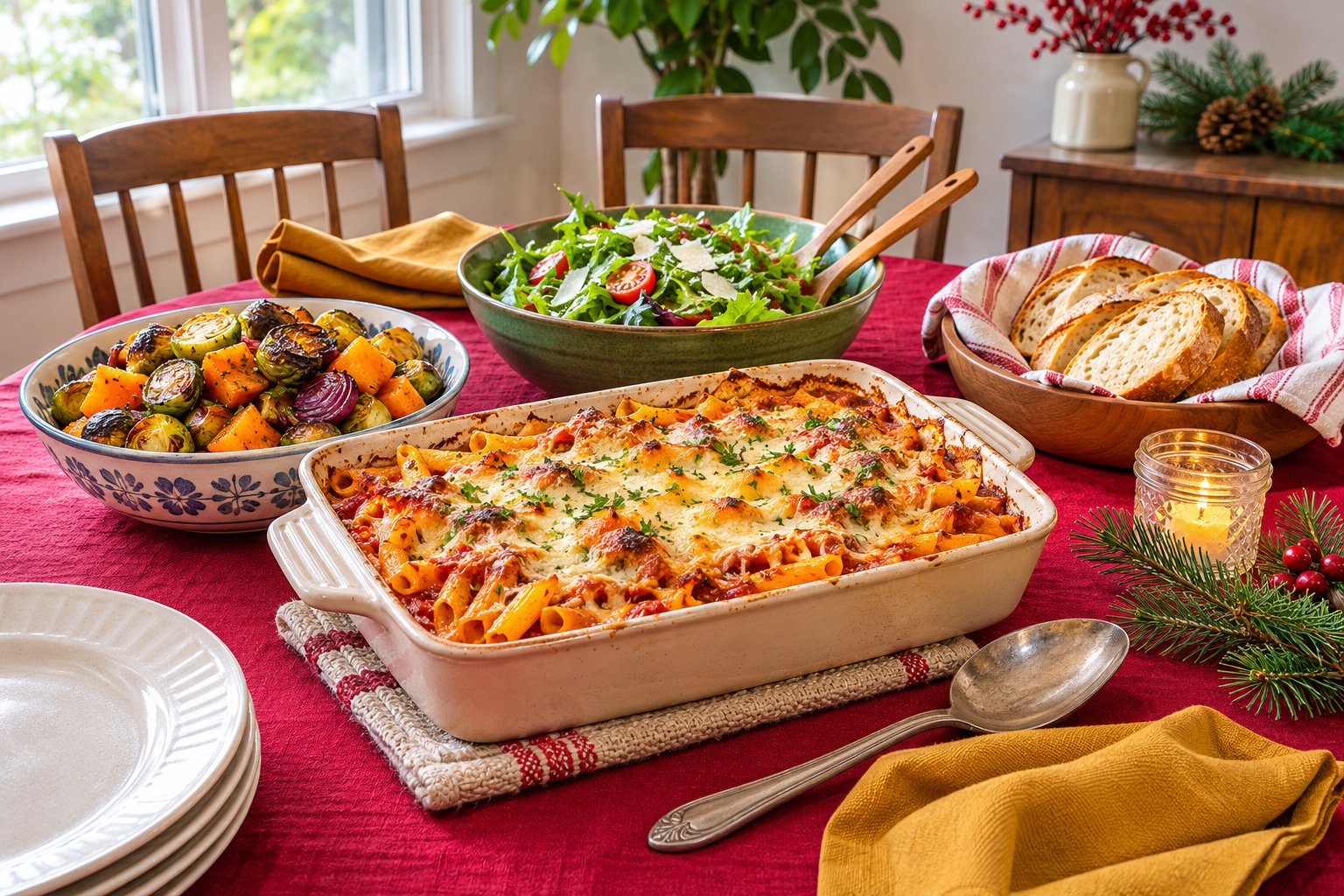
A holiday potluck can spread the work and the cost, but only if the host has a plan. Without one, you can end up buying a full dinner while guests arrive with enough dessert for three parties.
To host a holiday potluck on a budget, decide what you will provide, assign the remaining dishes and set a limit that includes drinks and serving supplies. Then make the gathering feel welcoming with what you already own. The menu can be generous without every dish coming from your kitchen.
Choose the kind of gathering first
Decide whether you are hosting dinner, a lunch or a dessert and game afternoon. Say which one it is in the invitation so guests know what to expect. A dessert gathering is perfectly complete when nobody arrives expecting a full meal.
Confirm who is coming before shopping. Ask about dietary needs while there is still time to plan and let guests know the menu format. You are coordinating suitable choices, not asking everyone to bring enough food for an unknown crowd.
If the budget only works when every guest makes a contribution, choose a simpler format. Leave space for someone who cannot bring a dish. The invitation should feel like an invitation, rather than an unexpected bill.
Give the menu a few clear jobs
Pick the dish you are comfortable providing and tell guests what is still needed. A shared list or a short group message can keep the meal balanced. Ask each person to claim a specific contribution instead of saying, “Bring anything.”
- Main dish: Confirm who is bringing it and how many people it is intended to serve.
- Sides: Coordinate a few different choices rather than several versions of the same dish.
- Dessert: Decide how many options the gathering needs.
- Drinks: Make ownership clear, including any ice or cups needed.
- Serving: Ask whether each dish will arrive with its own serving utensil.
A guest bringing bread might already have a basket. Someone bringing a salad may be able to bring the bowl and tongs. These small details prevent a last minute shopping trip for things that are already coming through the door.
Make a host budget that includes the quiet extras
Set your limit before picking recipes. Include the dish you are making, drinks you have agreed to supply, any genuinely missing serving items and a small cushion for changes. Check your cupboards before adding napkins, foil or storage containers to the list.
Here is an illustrative $50 host budget for a shared meal. These amounts are planning allowances, not current grocery prices or a promise that they will suit every group.
| What the host provides | Allowance |
|---|---|
| One main dish | $25 |
| Simple drinks and ice | $8 |
| One backup side | $7 |
| Missing serving supplies | $5 |
| Room for a change | $5 |
| Total | $50 |
If your chosen main dish takes $35, adjust another line or choose a different recipe. A written limit is useful because it shows the tradeoff before the groceries are in the cart.
Choose a recipe around ingredients you can use again
Look for a dish you know how to make and can prepare with familiar ingredients. A recipe that needs six small specialty purchases can cost more than its main ingredient suggests. Check which ingredients are already in the kitchen and which leftovers will fit another meal.
Use our kitchen first grocery plan to build a focused list. If a larger pack looks cheaper, compare the amount you will use with the total you have to spend. The multipack price guide covers that calculation.
Coordinate access to the kitchen too. Ask whether a guest’s dish needs oven space or refrigeration on arrival. Four dishes that all need finishing at once can make a relaxed gathering harder to manage. Choose contributions that fit your actual facilities and follow the appropriate food handling guidance for each dish.
Set the table before buying decorations
Lay out the plates, glasses and serving dishes you own. Mixed plates can work together when the rest of the table is simple. A clean cloth, a runner you already have or a few reusable napkins may be all the presentation needs.
Borrow the missing large bowl instead of buying a complete serving set for one afternoon. If you need to purchase something, name its next use. A practical dish that will return to regular kitchen duty has a clearer purpose than several seasonal accessories.
For more ways to change the setting without filling a cart, try our guide to refreshing a room with what you already own. Give the table enough space for the food before adding anything decorative.
Send one useful message before the day
A brief reminder can confirm the arrival time, the dish each person is bringing and whether it needs finishing at your home. Mention serving utensils and ask guests to tell you if their plans change. That is enough; the gathering does not need a complicated set of instructions.
Plan the cleanup with the same simplicity. Have your existing containers ready, decide which serving dishes belong to guests and return borrowed items promptly. If an enjoyable evening leaves you with three new storage purchases, those costs belong in the event budget too.
What if a guest asks what to bring?
Offer one or two specific, manageable choices based on the gaps in the menu. “Bread or a simple salad would help” is easier to act on than “Anything is fine.” Let them choose what suits their time and budget.
What if you are bringing a dish instead of hosting?
Ask what is needed, choose a recipe within your own limit and confirm the serving size. Bring the utensil it needs and avoid assuming the host has spare oven space. One suitable contribution is enough; you do not need to add a second dish because another guest’s plans look more elaborate.