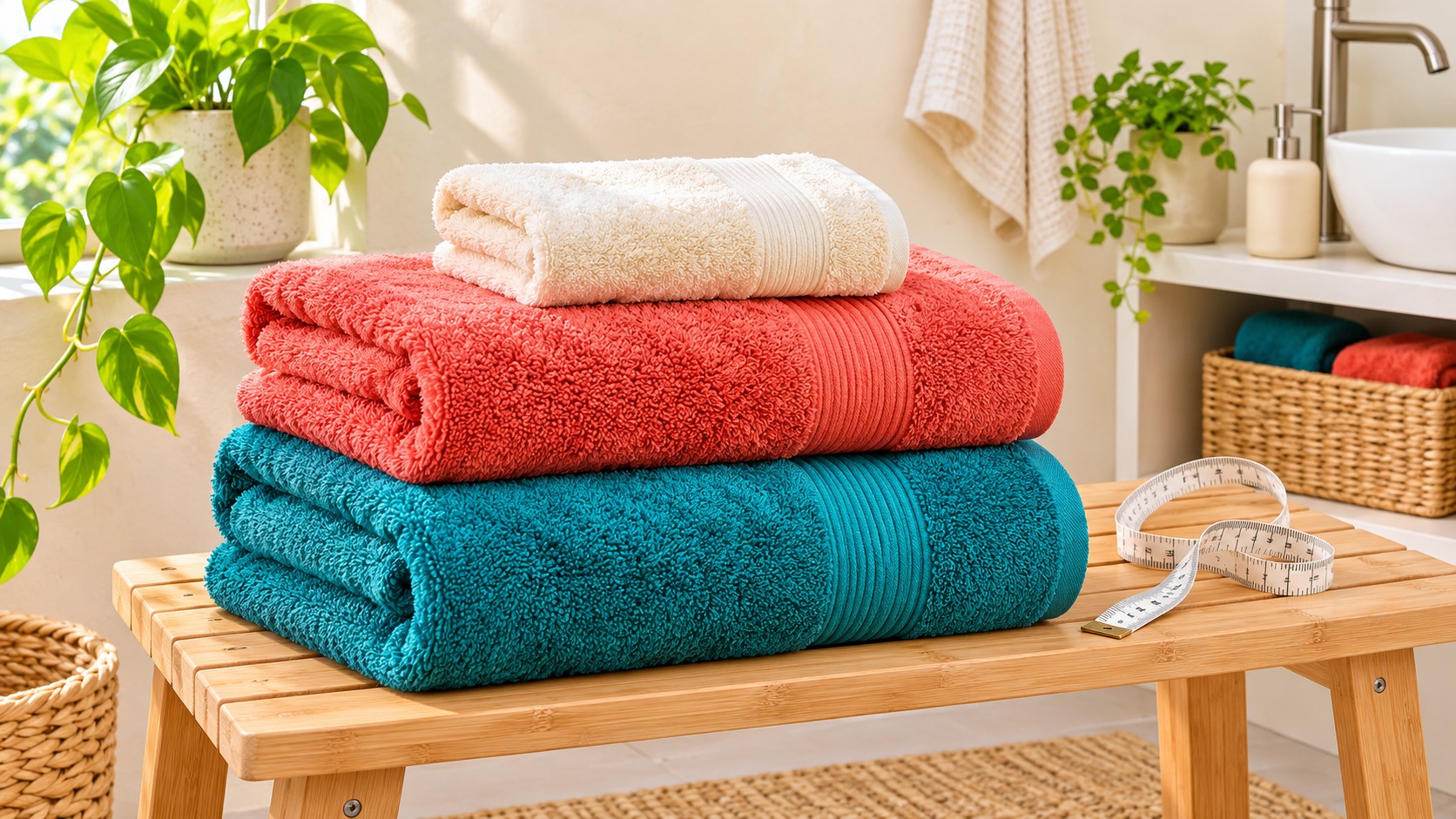
Before replacing the towels in your bathroom, unfold one you like and measure it. That gives you a more useful shopping reference than a product photo of a perfectly arranged stack. Towels described with similar names can have different dimensions, and a large set may contain fewer bath towels than you expect.
Buying towels online on a budget starts with the pieces you need. Decide on the size, quantity and care routine first. Then compare sets with individual towels, using the actual contents rather than the number printed beside the discount.
Make a small replacement list
Sort the towels you currently use. Keep the pieces that still serve their purpose and identify the gaps. You might need two everyday bath towels, a few hand towels or a separate set for occasional guests. Those are different purchases, even when a retailer places them in the same collection.
Consider how many towels are in use while the rest are being washed or dried. Your household’s routine is a better starting point than a suggested quantity for a home that operates differently. Count the storage space too. A cupboard that barely closes is giving you useful information.
If the bathroom simply needs a different look, first try moving or regrouping the towels you own. Our guide to refreshing a room without buying more decor offers ways to identify what is missing before making a purchase.
Use measurements instead of names
Read the listed width and length for every towel in the set. A label such as bath towel or bath sheet helps describe the product, but it does not replace the measurements. Check whether the listing uses inches or centimeters before comparing it with the towel you measured at home.
Think about the place where the towel will hang and the way you like to use it. A larger towel may feel comfortable while taking up more space on a rail or in the laundry. A smaller one may fit a guest setup well without being what you want for everyday bathing.
Write down your preferred dimensions in your shopping note. The same habit helps with other home textiles, as our curtain measurement guide explains. A clear size requirement makes a sale easier to assess because you know when to stop looking.
Translate a set into the pieces you want
Read the contents line by line. A six piece set could include two bath towels, two hand towels and two washcloths. Another six piece set might contain six items of a single size. The piece count alone tells you very little.
Here is a hypothetical comparison. Set A costs $30 and contains two bath towels, two hand towels and two washcloths. Two individual bath towels from another option cost $24. If you need only bath towels, the individual option costs $6 less. If you also need all four smaller pieces and their quality and care requirements suit you, the set may deserve a closer look.
Do not divide the set price by six and treat every piece as an equivalent bath towel. Instead, compare the cost of buying the particular combination you need. Add shipping and any minimum purchase requirement before deciding which option is cheaper.
Read material and care details together
Look for the stated fiber composition and the instructions for the exact product. Consider whether you can follow its washing and drying directions with your normal laundry routine. Avoid buying a towel on the assumption that a familiar material name guarantees a particular feel, absorbency or drying time.
If a listing supplies fabric weight, use that information alongside dimensions, construction and care requirements. Do not rely on one number as a complete quality score. Reviews can raise useful questions about the product, but another household’s experience does not establish how it will perform in yours.
Check return conditions before opening, washing or using the towels. The steps required to assess them can affect whether they remain returnable. Read the retailer’s current policy and any product exclusions rather than assuming every home textile follows the same rule.
Keep color decisions manageable
Compare the new color with the bathroom and the pieces you plan to keep. Screen settings and lighting can change how a shade appears. If an exact match matters, look for whatever sample or detailed product information the seller provides.
Buying everything at once can be convenient, but it also commits you to the full quantity before you know whether you like the towels. Where practical, try a smaller purchase first. Include any extra delivery cost in that decision rather than assuming separate orders will be cheaper.
A short clearance shopping list can keep the search focused: required size, useful quantity, acceptable colors and spending limit. If an offer misses the measurements you need, keep looking even when the percentage is impressive.
Finish with a plan for the cupboard
Before checking out, decide where the new towels will go and which older pieces they replace. Keep useful spares deliberately rather than allowing every purchase to expand the collection. You can apply the same approach to food storage containers elsewhere in the home.
The right order should leave you with the sizes you wanted and a quantity that fits daily life. A modest replacement purchase can be more useful than a coordinated tower of towels that spends most of its time waiting for cupboard space.