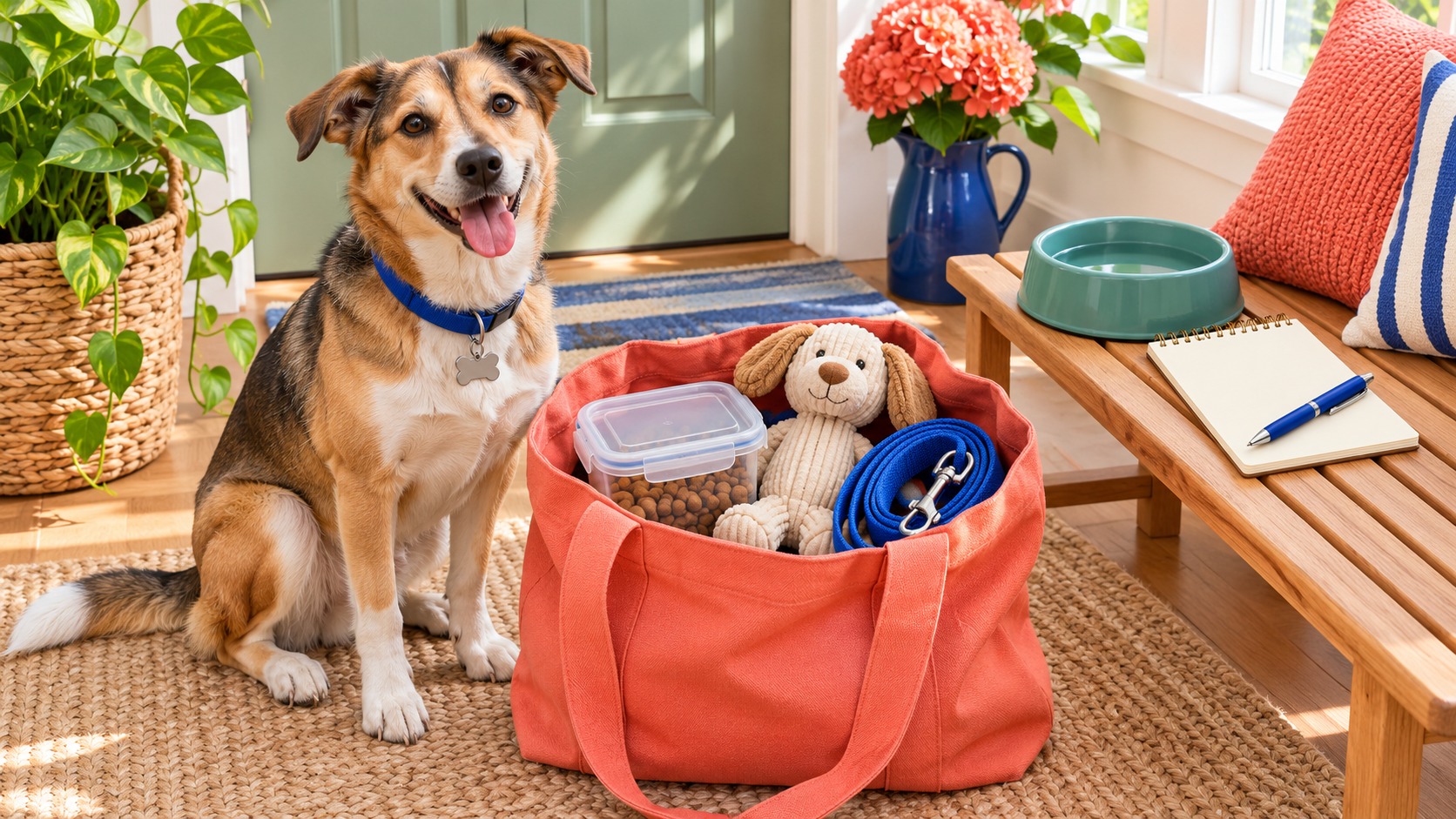
A pet sitter should not have to solve a cupboard puzzle to find the food scoop. A little preparation can make the visit easier without sending you out for a new set of bowls, bags and organizers. The most useful kit usually contains the things your pet already uses, placed somewhere obvious.
Start with the care arrangement you have agreed with the sitter. A short visit to your home needs a different setup from an overnight stay elsewhere. Discuss the routine, access and supplies first, then gather the familiar items that support that plan.
Walk through one ordinary day
Write down what happens from the first meal to the last outing or evening check. Include the details another person cannot infer, such as which bowl belongs to which pet, where you keep the leash and which door you normally use.
Keep instructions specific to your pet and your arrangement. “Feed dinner as usual” means very little to someone who is helping for the first time. Use the food quantities and care instructions you normally follow, and make sure the sitter understands them before you leave.
If your pet has care needs beyond the agreed service, discuss those separately with the sitter and the appropriate professional. Do not assume that a general supply kit means the sitter can provide every kind of care. Clear agreement is part of making the arrangement work.
Gather the supplies already in use
Choose a visible shelf, an ordinary tote or a clear space near the supplies. Keep everything accessible while respecting any storage directions. A kit can be a defined area in your home rather than a bag that moves every item out of its usual place.
- The regular food, its scoop and the written serving instructions.
- The usual bowls and the place where they are cleaned.
- The familiar leash or other equipment appropriate to the agreed care.
- Waste bags or the supplies used for the normal cleaning routine.
- A familiar bed, blanket or suitable toy if needed for the arrangement.
Leave food in its appropriate packaging or a suitable storage container, and retain the information the sitter needs to identify it. If you are choosing a replacement container, our container buying guide explains how to compare size, contents and care instructions without buying an oversized set.
Count what the full visit requires
Check quantities for the entire time you will be away. Account for your pet’s usual needs and the possibility of a reasonable travel delay that you have discussed with the sitter. Avoid changing the routine simply because a new food or accessory is on sale.
For a hypothetical inventory, you might discover that the home already has the right bowls, a suitable blanket and enough waste bags, but the regular food will run short before you return. The useful shopping list is the food needed for the arrangement. A discounted accessory bundle does not fill that gap.
If a larger pack looks appealing, compare the amount you will actually use and can appropriately store. Our guide to pet supply bundles and subscriptions looks at quantities, recurring orders and the full purchase cost. Keep any subscription decision separate from the immediate need to prepare for this visit.
Put the important information on one page
Leave your contact information, an agreed backup contact and the veterinary contact details you want the sitter to use. Discuss what to do if you cannot be reached and how urgent concerns will be handled. Keep the plan clear before departure rather than expecting the sitter to interpret a long message thread.
Include practical household information relevant to the visit: where to find cleaning supplies, how you want doors secured and any rooms that are out of bounds. Provide access details privately and directly. Avoid leaving sensitive codes or personal information visible where visitors can see them.
Tell the sitter how you would like updates and choose a reasonable format together. A short message confirming that the planned visit took place may be enough for one arrangement; another may need more detail. Write the agreement down so both of you know what is expected.
Explain the useful details in person
Show the sitter the setup before you leave, particularly if they have not cared for your pet before. Demonstrate how familiar equipment is used and let them ask questions. Point out anything in the written instructions that is easy to overlook.
Check the condition of the supplies you leave. If an item needs replacement, choose it because it is unsuitable for the job, rather than because the kit lacks a coordinated look. Read product instructions and use only items suitable for your pet and the planned activity.
For ordinary grooming supplies included in the arrangement, keep the routine simple and agreed in advance. Our pet grooming shopping guide can help you separate basic purchases from extras. A sitter’s visit is not the ideal moment to introduce an unfamiliar grooming project.
Keep the kit useful after you return
Ask whether anything was hard to find or unclear. Update the one page of instructions while the experience is fresh. Return supplies to their normal places and note anything that needs replenishing.
Keep the list for the next trip, but recheck contacts, quantities and care instructions each time. A familiar tote and a clear plan can do the job repeatedly. The part worth improving is usually the information and arrangement, rather than the number of products inside.