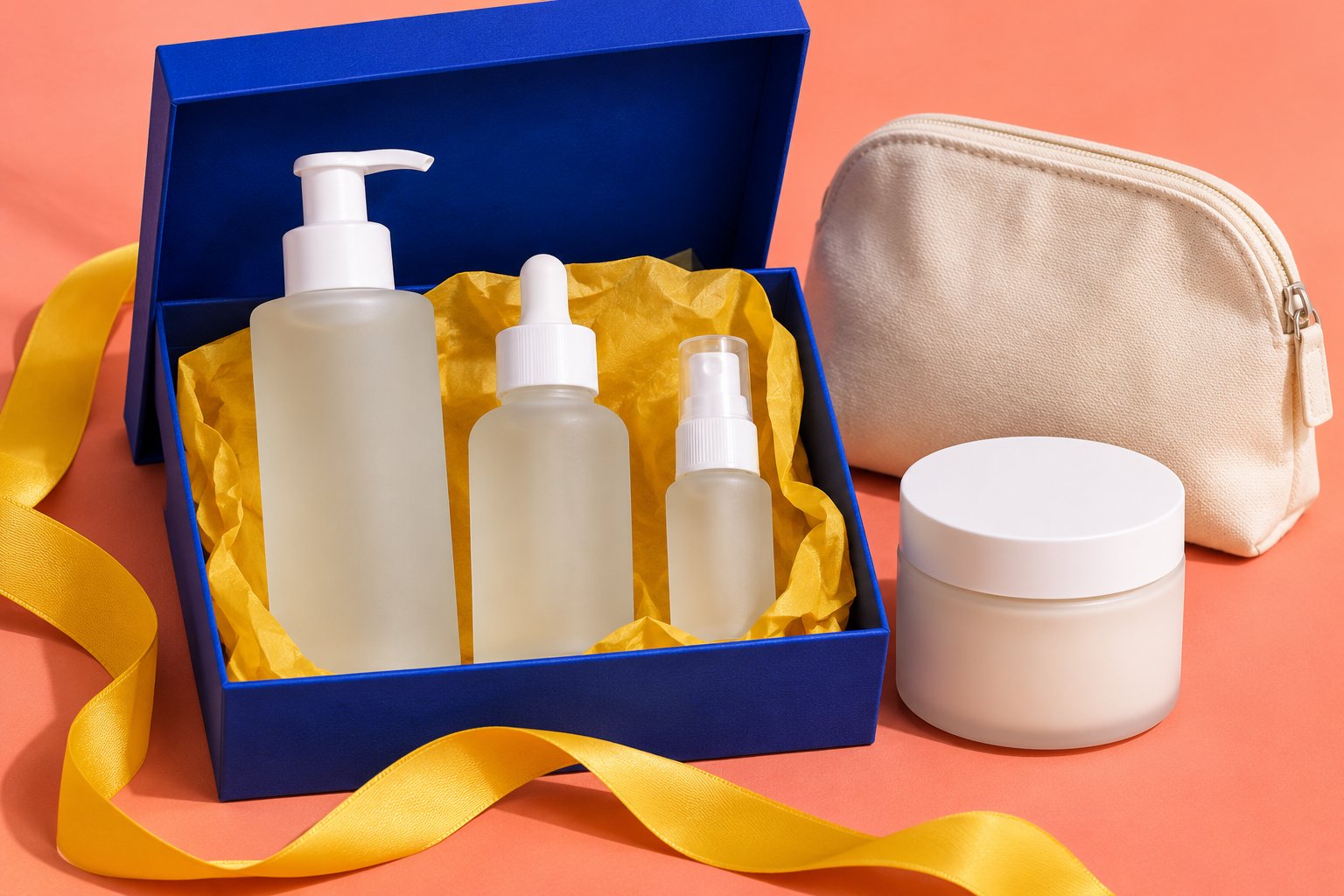
A beauty gift set can look like a whole routine in one pretty box. Then you open the contents list and discover that the product you wanted is tiny, the largest item is something you never use and the “value” includes a pouch you already own.
To compare beauty gift sets, list each product and its size, identify what you will actually use and compare those useful items with their individual prices. The number of pieces is a starting point. It is not a measure of how well the set fits your routine or the person receiving it.
Give every item a job before giving it a value
Start with the product names, shades, sizes and quantities. Sort them into three groups: already used, genuinely wanted and unlikely to use. This keeps the best looking item from making the entire box seem essential.
For skincare, look for familiar products and read the labels. For makeup, check the exact shades rather than a general color description. A collection containing your preferred product in an unsuitable shade is still an unsuitable purchase.
If you are buying a gift, ask about a favorite product or routine where that is practical. Someone who keeps things simple may enjoy one familiar item more than a large assortment. Our guide to personal gifts on a small budget explains how a specific connection can matter more than the size of the present.
Separate a sample, a travel size and a regular product
Do not judge size from the box photograph. Read the amount for each item and compare it with the matching standalone listing. A tube that looks substantial beside several smaller bottles may still contain much less than the version you normally buy.
Use the same units when comparing equivalent products. If one matching lotion is listed in milliliters, compare it with another volume listing in milliliters. Do not assume that a gram of a product is the same as a milliliter. Different formulas also make poor direct substitutes, even when the arithmetic is easy.
A hypothetical 50 ml lotion at $20 costs $0.40 per ml. A 15 ml version of the same formula at $8 costs about $0.53 per ml. The smaller version costs less today, while the larger one offers a lower unit price. Which matters more depends on whether you want a trial amount or a replacement you know you will use.
Compare the box with your real alternative purchase
Imagine a gift set costs $36. It contains a 50 ml lotion, a small cleanser, a lip product and a pouch. The lotion you intended to buy costs $24 separately. If you would not use the other items, choosing the set means spending an extra $12 for things outside your plan.
Now imagine you also intended to buy that exact cleanser, in that size, for $8 and the same lip product for $7. Those three planned purchases would total $39. A $36 set could save $3 before shipping and tax. These are illustrative figures, not current product prices.
Keep the pouch at zero in the calculation unless you would otherwise buy one. It may make the gift attractive, but an attractive extra is not automatically a saving. If you want a reusable comparison method, our multipack price guide explains how quantity and upfront cost work together.
Use a small comparison note while shopping
- Exact set name and total delivered price.
- Each included product, shade and amount.
- Products you already planned to buy.
- Current separate prices for those matching products and sizes.
- Extras you would use but would not buy independently.
- Return conditions and any stated use or storage information.
Compare the separate prices that are available to you now. A suggested combined value may use regular prices, different sizes or items that are not sold separately. If you cannot verify a fair comparison, treat the set as a $36 purchase to judge on its own merits rather than a proven discount.
For fragrance samples specifically, our fragrance discovery set guide covers a different set of details, including sample amounts and any redemption conditions. Keep those special features separate from an ordinary beauty assortment.
Think about when the products will be opened
A set is less useful when it arrives before you have finished several similar products. Check the information supplied by the manufacturer, keep unopened items as directed and avoid treating a growing cupboard as money saved.
For a gift, leave the packaging and ingredient information intact. If a product is unfamiliar, its inclusion in a set does not establish that it suits the recipient. This comparison is about purchase value, not a recommendation to add several new products to a routine at once.
You can also plan a pleasant evening around products you already own. Our affordable at home spa night guide starts there, rather than with a new shopping list.
Check returns before choosing a gift
Find out whether opening any part of the set affects the return conditions for the whole purchase. Confirm the deadline and whether a gift receipt is available. If a shade or formula is uncertain, an easy return may be more useful than another small bottle in the box.
When does the smaller set make sense?
A smaller set can make sense when you specifically want a modest amount, know the included products fit your needs and prefer the lower total. A higher price per milliliter does not automatically make a small purchase wrong. The useful comparison is between what you will spend and what you will actually enjoy using.
Choose the set when its useful contents earn the price. Otherwise, one well chosen product can be a complete purchase or a thoughtful gift.